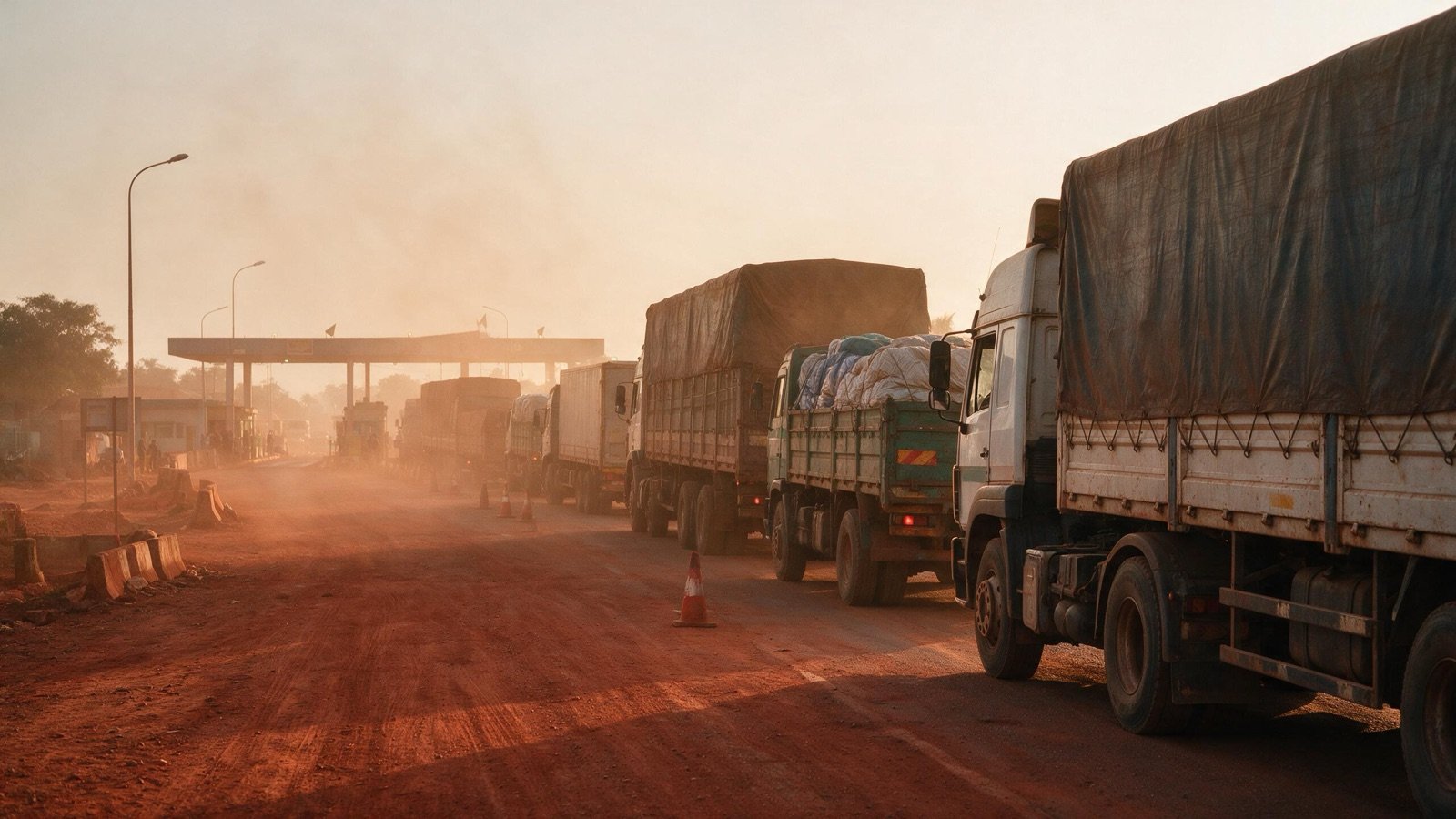
On paper, goods originating in the region now move under reduced duties, or none at all. In practice, road professionals point to a different decisive variable: time.
Monitors of road practices still routinely record more than twenty checkpoints on a single international journey along the main regional corridors. Each stop immobilises a vehicle, a driver and a load.
A cost that appears on no tariff schedule
This cost shows up in no customs schedule: it is recorded in logbooks and in incidental charges. It hits small operators first, since they have neither the cash reserves nor the bargaining power to absorb it.
- The preferential tariff regime is in place
- Transit time remains the main cost variable
- Small operators are the most exposed
Interconnection of customs systems is progressing: a declaration filed at departure can now be read at the arrival office, which removes duplicate data entry. Coverage, however, is still partial.