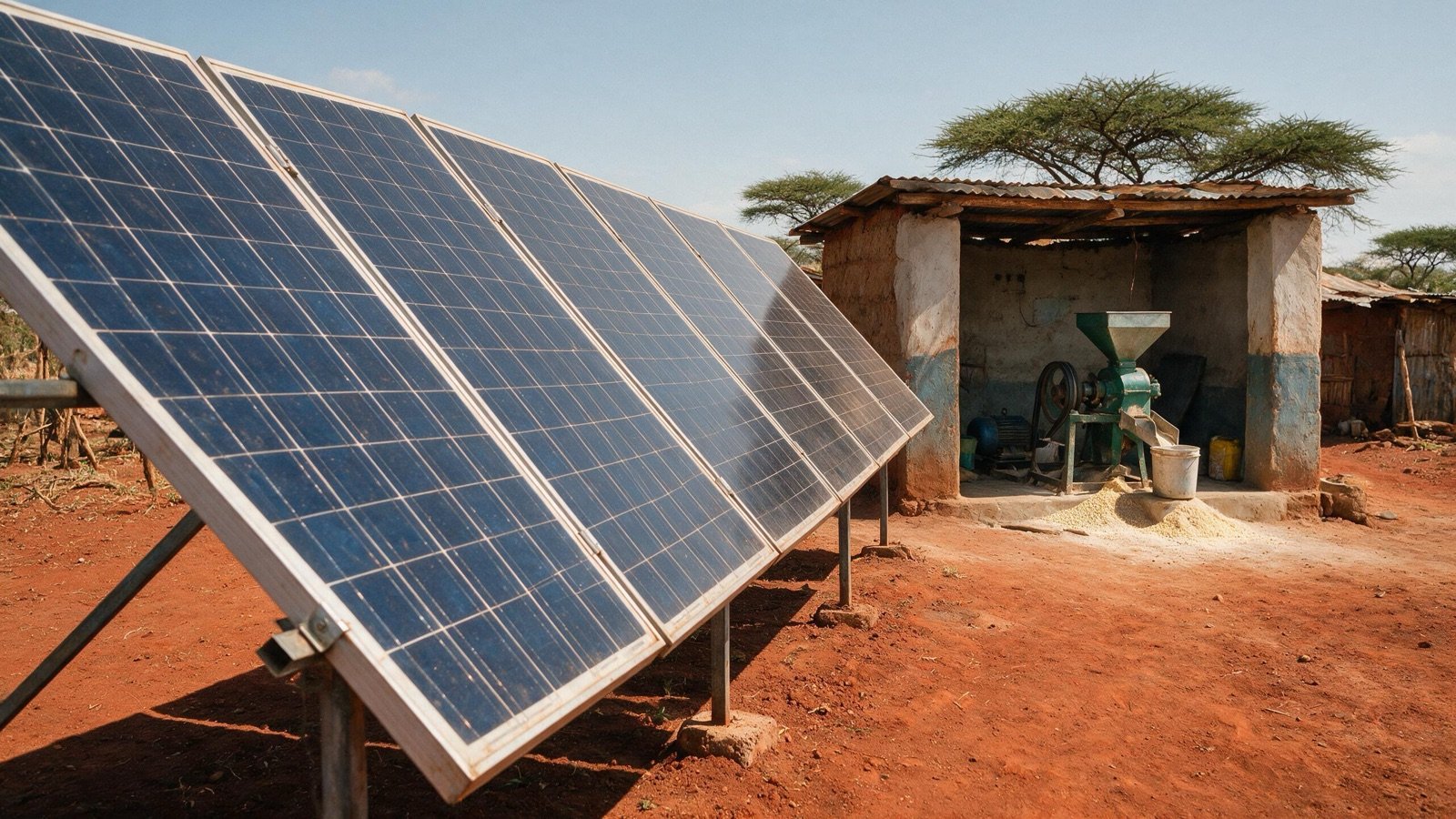
The individual solar kit was a real step forward: a few bulbs, a phone charger, sometimes a small television, paid for in instalments.
But that level of service supports no productive use. And it is economic activity (milling grain, chilling fish, welding, irrigating) that makes electrification durable, because it creates the ability to pay.
The anchor-load constraint
Village mini-grids answer that need, on one condition: their viability depends on an anchor load of commercial demand identified before installation, failing which the equipment sits idle.
Pricing is politically sensitive: the real cost of a locally produced kilowatt-hour often exceeds the subsidised national tariff.